FLASC#
Welcome to the documentation of the NLR FLASC repository!
Note
As of FLASC v2.5, FLASC requires python v3.10 or greater.
FLASC provides a comprehensive toolkit for wind farm analysis, combining SCADA data processing with advanced wake modeling capabilities. The repository is intended as a community-driven toolbox, available on its GitHub Repository.
What is FLASC?#
FLASC offers analysis tools for SCADA data filtering & analysis, model validation, field experiment design, and field experiment monitoring. Linked to NLR's FLORIS model, FLASC enables researchers and practitioners to:
Process and filter SCADA data with robust outlier detection and quality control
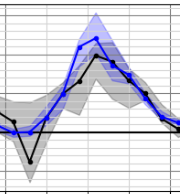
Analyze energy production patterns using energy ratio methodology for wake quantification
Calibrate wake models automatically to match observed performance
Evaluate field experiments with comprehensive uplift analysis tools
Documentation Structure#
This documentation is organized to guide you from basic concepts to advanced applications:
Getting Started#
Introduction: Overview of FLASC capabilities and package structure
Installation: Setup instructions and requirements
Core Concepts#
FLASC Data Format: Understanding FLASC's data structures and conventions
Energy Ratio Analysis: Quantifying wake effects and turbine performance
Energy Change Analysis: Methods for calculating production changes
Model Fitting: Automated FLORIS model calibration to SCADA data
Practical Applications#
The documentation includes extensive examples demonstrating real-world applications using both synthetic data (examples_artificial_data/) and field experiment data (examples_smarteole/). These examples follow a typical FLASC workflow: data processing → analysis → model calibration.
Key Features#
FLASC's modular design supports the complete wind farm analysis workflow:
Data Processing: Import, filter, and quality-control SCADA data with specialized tools for wind measurements
Wake Analysis: Quantify wake effects using energy ratios and validate against physics-based models
Model Calibration: Automatically tune FLORIS parameters to match observed performance
Experiment Analysis: Evaluate control strategies and technology impacts with statistical rigor
The FLASC repository is intended as a community driven toolbox, available on its GitHub Repository.
WETO software#
FLASC is primarily developed with the support of the U.S. Department of Energy and is part of the WETO Software Stack. For more information and other integrated modeling software, see: